Showing posts with label Agriculture and Forestry. Show all posts

Saturday, February 28, 2015

Grass Productivity - An Introduction to Rational Grazing

New Release: Andre Voisin's Grass Productivity

Grass Productivity - An Introduction to Rational Grazing

SIMPLE questions often help us to understand problems better; and I think it indispensable, at the beginning of this work, to ask a question which appears simple in the extreme:

“What is grazing?”

The answer is generally as follows:

“Causing grass to be eaten by an animal.”

That is correct! But here is another answer which, to my mind, is more realistic:

“Causing the grass and the animal to meet.”

Since this book is almost exclusively concerned with grazing by cattle, I propose the following definition to the reader, requesting him to allow it to become well impressed upon his mind:

Grazing is the meeting of cow and grass.

It is a meeting of this nature, or at least the first steps towards such an end, that I want to attempt in this book.

We will not study the grass and the cow separately. We will always consider them simultaneously and together, in such a manner as best to satisfy the demands of each.

When we think of the cow, we will not forget the demands of the grass. When we examine the grass, we will always bear in mind the demands of the cow.

It is by satisfying as far as possible the demands of both parties that we will arrive at a rational grazing, which will provide us with maximum productivity on the part of the grass while at the same time allowing the cow to give optimum performance.

[From the Introduction]

This is the original text, which showed how what is known today as "rotational", "management intensive", or"mob grazing" can triple the output of any given pasture - which means more than triple profits for a grass fed beef or dairy farmer. This text has been recovered from the original 1959 edition and republished for your use in a modern format - perfect for a digital reference library or a print-based one (or both!)

502 pages.

eBook now available:


http://itunes.apple.com/us/book/isbn9781312403574
http://www.amazon.com/dp/B00MERYPJE

Trade paperback (6"x9", 66 pages) available on Lulu and soon on Amazon and all brick-and-mortar bookstores:
Support independent publishing: Buy this book on Lulu.
Hardback textbook available:


Sunday, February 9, 2014

How to Humanely Pasture-Raise Beef Naturally

What's All-Natural, Humane, Pasture-Raised?

Pasture Raised Cattle are Humanely Treated
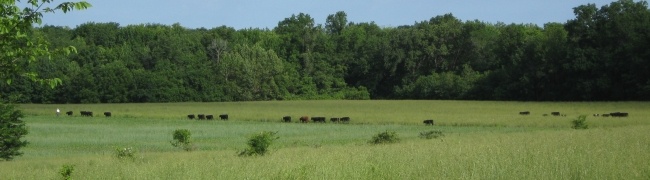
Left to themselves, cows are naturally pasture raised. But humans have a very interesting view of things – not just we who live in Missouri. Humans are unique among all other lifeforms with the ability to think and consider and worry about the life-forms around them. While other animals can readily care for and respect humans, they don't seem to put the empathy behind it that we do.

And while that isn't a negative attribute, there are humans among us who prey on others by exploiting this emotional context. "Humane" is actually putting human attributes and attitudes into other species around us, regardless of whether they exist there or not. When people are repeating emotionally-charged phrases such as "inhumanely treated", along with "factory farms" and "puppy mills", in all cases they are stretching things a bit thin.

Humans do not know exactly and precisely what is being "felt" by any other species on this planet. And that is our particular problem, if you will. We can project that "if that (animal) were human, this is what they'd feel". And that's about it.

Same argument goes for giving anesthetics to animals. Since we don't know their pain thresholds and even what they actually consider as "pain", we simply don't know how much to give them or if it even works to the same degree a similar drug works on humans. (And this data I got from a vet at a University where they generally stay up on their studies...)

For cows, you want them as gentle as possible all the time. Eating, drinking, resting. They gain weight faster, and stay generally healthier. So you move slow around them and give them the distance they want (unless they want you to scratch their nose or between the shoulder-blades). As well, animals which are excited when killed have adrenaline in their muscle, which gives an off-taste to their meat - according to humans, anyway.

In general, you learn about how to handle cattle by watching, listening, and interacting with them. If you do close observation from day to day and year to year, you'll make the mental notes of how and when to do or do not do what.

Some books and papers (particularly those by Temple Grandin - and see her TED talk) contain a great deal of accurate observations about cattle behavior. And these can all be tested by yourself to see if they work or not.

Raising cattle is an interactive experience. And there is a lot to share which we don't have space for on this page. The trick is that you take care of them as best you can, and keep them well fed, healthy, and content as much of every day you are able.

And this means enough shelter, water, and food - plus the occasional vet visit if something goes wrong.

The rewards are numerous and plentiful.

If you don't eat meat, you may think I make pets out of these - and to a degree, I do. But I also know that they were put here to do a certain job, just as I am. So I don't have remorse when I send one off for processing.  As humane as I treat my livestock, they still aren't human. I just don't get into that mindset. It's not one that a farmer would adopt. (They've "proved" that plants "feel pain" and can even predict your actions telepathically - but does that mean all grain and fruit harvesting is bad?)

Enough said.

If anyone wants to see how their cattle are raised, they've got an open invitation to come on out - just call ahead so we can adjust our workload to meet you. (Unattended tours are not permitted by our insurance.)

Humane is as humane does, to paraphrase Forrest Gump.
Enhanced by Zemanta