Showing posts with label Grazing. Show all posts

Tuesday, March 31, 2015

Classic: Michael Graham's Soil and Sense

New Release! Soil and Sense by Michael Graham


Here is the crux of the matter, as I see it. The food for men cannot be grown unless the land is also fed. That goes almost without saying. It is also true that the folded sheep are reduced in number and that the great heaps of dung from the bullock yards are not so common as they were. These were the stores of fertility that the country, mainly relied on, but we do not hear that they are to be restored. Instead there is talk of ploughing-out grassland, and of the proper use of fertilizers. I find that insubstantial.

On the face of it there is a case for serious inquiry. Perhaps someone knows that the land is being fed rightly, 'but no-one has explained it to me and I cannot find that anyone else is better informed.

I searched the public library for a short book that would give the key to this puzzle, but I did not find what I wanted. There were indeed some good books by good scientists and they are in my list of references at the end of this book, but they each dealt with only a part of the problem. For example, books that described the soil bacteria made no mention of landlords.. The popular books on agriculture included novels, biographies, and essays, but these all avoided technical details, and it is difficult to state or solve a practical problem without setting it against a background of details.

Because I found no one book, I had to wrestle out the problem for myself, from various books and with the help of such experience of the land as a man may gain in his leisure. This, then, is a short book on the central problem of agriculture, that is the quality of soil.

First published 1941

- - - -
eBook now available:
Buy now

http://itunes.apple.com/us/book/isbn9781312403574
http://www.amazon.com/dp/B00MERYPJE

Trade paperback (6"x9", 154 pages) available on Lulu and soon on Amazon and all brick-and-mortar bookstores:
Support independent publishing: Buy this book on Lulu.

Saturday, February 28, 2015

Grass Productivity - An Introduction to Rational Grazing

New Release: Andre Voisin's Grass Productivity

Grass Productivity - An Introduction to Rational Grazing

SIMPLE questions often help us to understand problems better; and I think it indispensable, at the beginning of this work, to ask a question which appears simple in the extreme:

“What is grazing?”

The answer is generally as follows:

“Causing grass to be eaten by an animal.”

That is correct! But here is another answer which, to my mind, is more realistic:

“Causing the grass and the animal to meet.”

Since this book is almost exclusively concerned with grazing by cattle, I propose the following definition to the reader, requesting him to allow it to become well impressed upon his mind:

Grazing is the meeting of cow and grass.

It is a meeting of this nature, or at least the first steps towards such an end, that I want to attempt in this book.

We will not study the grass and the cow separately. We will always consider them simultaneously and together, in such a manner as best to satisfy the demands of each.

When we think of the cow, we will not forget the demands of the grass. When we examine the grass, we will always bear in mind the demands of the cow.

It is by satisfying as far as possible the demands of both parties that we will arrive at a rational grazing, which will provide us with maximum productivity on the part of the grass while at the same time allowing the cow to give optimum performance.

[From the Introduction]

This is the original text, which showed how what is known today as "rotational", "management intensive", or"mob grazing" can triple the output of any given pasture - which means more than triple profits for a grass fed beef or dairy farmer. This text has been recovered from the original 1959 edition and republished for your use in a modern format - perfect for a digital reference library or a print-based one (or both!)

502 pages.

eBook now available:


http://itunes.apple.com/us/book/isbn9781312403574
http://www.amazon.com/dp/B00MERYPJE

Trade paperback (6"x9", 66 pages) available on Lulu and soon on Amazon and all brick-and-mortar bookstores:
Support independent publishing: Buy this book on Lulu.
Hardback textbook available:


Tuesday, April 15, 2014

Why our prices haven't gone up like everyone else.

Because we don't feed corn - and our costs haven't (really) gone up.

We don't raise the beef just to increase our profit margins.
 (photocredit: LandingMemo)

The point is to provide real value.

And that's not just limited to some of the best-tasting beef you can find for wholesale prices. It's treating people like family, or better. (We're working constantly to improve on that point.)

We're looking to get regular clients. That's more valuable than getting everything sold from year to year. Our prices are decent enough we don't have to rely on the auctions.

At this point, we have another value to add - prices lower than average, and higher quality than any supermarket. Plus you know where it comes from and you can visit to find out exactly how we raise them.

Sure, I don't get all the pictures, and stories, and videos up for you. Running a cattle farm keeps you more than busy. We're transitioning to only raising beef (don't need grain for anything much) and otherwise, working to put in permaculture everywhere else. At least I could get this blog post out.

Again, doing this just drops the cost of everything. The cattle do their own cultivation, fertilizing, and harvesting. Turning everything to meat. For you and yours.

Corn-feeding farmers have the problem of high corn prices (and beef that's as tasteless as chicken.) The drought messed up a lot of good pastures for the last few years, which has put a dent in the number cows available.

Meanwhile, China and other countries have improved their quality of life (so much so that some manufacturing is returning to Mexico and the U.S.) Their higher pay has them reaching for more beef. And their fears of Avian and Swine flu has them dropping the demand for chicken and pork.

Unfortunately, the drought has also raised prices on all sorts of other foods.

So we are all suffering under increased food budgets.

Meanwhile, the cost of our farming business hasn't gone up that much. We still buy hay and fencing supplies, but those haven't increased too badly.

Instead of just becoming another profiteer, we've simply kept things the same. 

The reason? To be able to keep regulars on board, to treat them fair, as well as we do our family.

We always have the auction as a back up. Especially these days - even through they'd rather have all-black, instead of our striped ones.

Our concentration is to keep this herd paying its way. They are to cover the entire costs of the farm, make it sustainable from here on out.

You'll note that I've taken the contact form down. Because I'm getting way too many new people coming my way. If I were just selling digital books, this would be fine. But we only raise about 10 steers a year, and that just goes so far.

We're extending the privilege of  being able to process your own beef and share it with your friends and family. That's the law.

So you buy a share (or whole) from us and then pay your processor when you pick up your meat. Simple. We take care of raising it for about 2 years.

Your welcome.

So - if you haven't already signed on with us, then send me an email. Or call me - and then send me an email. All that info is on the contact page.

But our prices don't have to change now. Your choice.

Monday, February 10, 2014

How to Convert Your Farm to Mob Grazing from Conventional

Moving from conventional to modern mob grazing
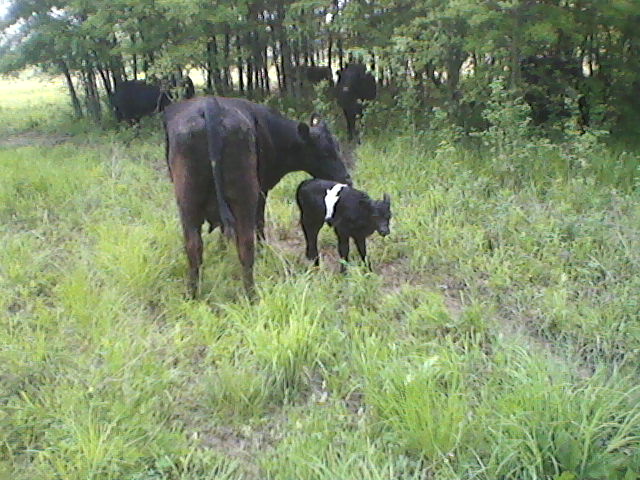
natural farming - grass fed beef cattle How to move from conventional to modern mob grazingOk, call it ultra-high-density stocking to achieve maximal lignified carbon sequestration fertilization. Yes, that’s very close to Joel Salatin’s work – and I just left out the “herbivorous solar conversion” part.

When you mob stock your grass fed beef cattle, they convert natural grasses, legumes, and forbs (plus everything else they can eat) into fertilizer – some of the best stuff you can put on a field. We call them four-legged self-reproducing combines with on-site storage. They take whatever is out there and turn it into meat, plus produce another of themselves every year. Since they last about 12-14 years, they will produce on average about 10 of themselves, which is a nice profit for a farmer.

Now Greg Judy doesn’t tell you one interesting fact about where he farms: if we didn’t farm this particular area of country and it wouldn’t turn to desert. In fact, our particular part of Missouri would turn into rather thick woods within about 40 – 100 years. And it would over-populate with deer along with other wildlife (like feral pigs), with cougars and various large predators making a comeback. (That's if some developer doesn't get a hold of it and cover it with concrete, gravel, trailer parks, "ranch" homes, and lots of water, sewer, and electrical connections.)

Of course (unless there's a city to commute to jobs) no humans would be around, because there’s no money in it – no real way to make a living. Trees grow too slowly, and our government doesn’t like us hunting and logging for a living. Now, there are some radical activists who would love that concept – but they are basically suicidal, anyway. (I took a college course on Geography a few years ago and discovered that this exact point is being taught in their government-approved textbooks. "Humans are basically at fault for everything, particularly the white male minorities" – so much for their touted diversity and tolerance campaigns.)

Back to the real world.

Now, most people in my “neck of the woods” are into high-overhead row crops. Those farmers that raise cattle on land they can’t “farm” use conventional grazing, which is leaving cattle on a fenced-in section until they mostly eat everything down. Then you move them over to another section and repeat. In July or August, you sell off what won’t make it through the “slump” where it’s too hot and dry to raise grass. Meanwhile, you save a couple of spots to make hay out of – which keeps that tiny herd through the winter. And you again sell off in the fall (at reduced prices) everything you can’t feed.

The weird part is that cows were meant to graze all year round. Even through snow. And mob stocking will set the land up to produce enough to make that happen. It’s just your management has to change.

Now, I’m no expert, but I have a tendency to write too much, so I’m writing about our own farming efforts so others can use what they can out of them.

1. Get out every day for some excuse and move some fences. Actually walk out in and around your cattle regardless of the weather. This gets them used to you. And you’ll get more familiar with the individual cattle and how they are doing. You’ll probably go through more pairs of boots, but it’s cheaper than fuel and engine parts.

2. Study up on Managed Grazing. This is the step that both Salatin and Judy did when they eventually moved to Allan Savory’s methods of ultra-high-density stocking.

3. Start laying some temporary electric lines out with battery-powered chargers,
subdividing your existing pastures so that cattle just have enough to eat for a couple of days in every small part. You’ll probably want to start with a small herd in a back pasture. We have some heifers and steers we keep back until they’re ready to meet the bull or the processor, so they are a good experiment. Take a nice pasture that already has a water supply available and a good perimeter fence.

(We stumbled onto an interesting idea of creating pie slices and moving the two long sides of it. This is until we can install a nice electric line inside that perimeter fence to power it. Put your charger at the point with some ground rods so you don’t have to move the charger every day. Sounds simple, but I’m writing it down here so you don’t have to figure it out – you’ve already got tons to figure out. This is just to get you started. [Update: We now start at an existing barbed wire perimeter fence and use that as the ground, doing a half-pie at a time.])

4. Start buying hay with the money you’d spend on fertilizer, fuel, and equipment for hay. It should buy you the same amount or more. Quit growing your own. Import other people’s grass onto your farm and use it to fertilize your own fields.  Now, I’ve been starting to lay out the hay on the bad spots (over-farmed) spots in my fields (even gullies) so the cattle eat and manure right there. In those spots by two years’ time you have a very thick growth coming on where nothing much did before. (Of course, if they don’t eat it down, it’s hard to disk, but we’re really moving back to permanent pastures everywhere, anyway, aren’t we?) But put those hay bales out where they’d do some good – not just in a feed lot where you are having to move it back out to the pastures again. Takes some foresight – but you’ll use your tractor a lot less during the winter as you do.

5. Start moving your cattle through those former hay pastures. Under managed grazing, you’ll get through these about three or four times over eight months. In mob grazing, you’ll get through about twice a year. All that former hay ground can start making beef pounds while it’s fertilized at the same time. Win-win.

6. Study the temporary layouts you are using. Cattle need three things – water, grass, and shelter. They actually like trees better than barns or sheds. So the best layout for a pasture is a savanna, where there are these huge shade trees popping up every 50 feet or so on a grid. You see, grass likes partial shade and cows keep eating in the shade. (One tip I heard was to trim off the lower limbs as high as you can – this keeps the shade moving, so the cows don’t just "drop everything" under the trees. You still need a lot of trees to pull that concept off – but that's another article, another time.) In “Grass-Fed Cattle”, Julius Ruechel says that you can take your whole farm and simply rotate the cattle through it as you go. Our own farm is dotted with ponds, strips of woods, and waterways that are full in the spring, so this is a no-brainer. [Update: Severe wind needs real wind-breaks, though. Even two standing walls with the point against prevailing storm winds (North-west for us.) will help. Some have used a semi-circle of hay bales as well.]

7. Study where you are putting fences – if you keep putting them in the same spot, maybe you should put a permanent fence up there. We use steel t-bar posts for corners and just leave them there with the insulators on (so we can find them later) and this tells us where we are coming back to all the time.

8. This brings up another point – use what you got to start with. There’s a lot of great fiberglass poles out there and fancy-dancy geared wind-up reels. We use reels for power cords and our old rebar poles with plastic insulators on them. (If you can’t shove them in with a heavy leather glove on your hand, you can carry a hammer on your belt for frozen or summer-hardened ground.) Invest in better gear when your cows start bringing you more profit from the lower overhead. Or not. Question: does it improve your efficiency enough to afford the investment?

- - - -

These are just the transitioning steps. Find and read everything you possibly can about the subject. Clip articles and put them in binders so you can re-read them. Buy books and dog-ear the good parts. Keep all this stuff by your easy chair so you can read when you come in to cool off or to warm up. Attend extension meetings and ask for these subjects to be brought up when they only want to talk about machine shops, grain storage, and crop prices.

And talk to your neighbors when you can. Compare notes.

This stuff can be done. And you can make a nice five-figure income which pays all your costs every year, as well as taxes and some nice retirement CD’s. The alternative is going broke and watching the trees take over. Still pretty, but not as exciting as raising cattle and getting all that good exercise plus lots of great beef in your diet.

Enhanced by Zemanta

Do Grass Fed Beef Profits Weather Drought Better?

Tough Times Coming for Grain-Finished Beef

Grass fed beef face tough price battle with higher inputs - not so grass finished beef. ref: Drought Shrunken Cattle Herd Portends Future Profits

This interesting observation stuck out for me:

"The message for cow-calf producers is to hold onto the cows if possible," Hurt says. "The short-term losses of the next 12 to 14 months will be replaced by large profits in late-2013, 2014 and 2015."

The anticipated "golden days" are based on reductions in per-capita beef supplies, leading to higher retail beef prices, and an expected return to more normal crop conditions in 2013.

While that could revive some optimism in the cattle industry, Hurt was quick to point out that most thoughts of herd expansion would be pushed off until late-2013.

"The exception is for producers in areas of the country that have abundant forages," he says. "For them, buying cows sold this fall from distressed owners appears to be a strategic move."

Last year, many cows were shipped up to Iowa to out-last the dry Texas/Oklahoma weather. This year, the drought was longer and more widespread, so I didn't hear about this being done so much.

Our cows stayed right where they were. When our corn turned out to be a bust, it became forage. Especially since there have been a lot of weeds grow up in between, which need to be grazed down before I replant to wheat this fall. (Far better to maintain our cows and grow our calves than cut it all down. What they don't eat, they stomp - and the biotics living in their manure adds to that mulch-effect.)

The concept is to manage your grazing well to begin with and then convert any other land you have into grazing (or haying - if you can't get cattle to it).

If your cattle are grass-based, not supplement-based, they'll continue to hold their condition right on through the worst of times. But when you manage your pastures, you don't run out.

Our stockpile is weak, but we saw this coming and got our hay put away. And that hay will go over the pastures we want to rebuild (were actually former crop ground). Extra hay stays stored (if we only put out as much as we actually need.)
Enhanced by Zemanta

How Does Natural Farming Affect You - and Mob Grazing Data Your Should Know

Natural Farming Methods Include High-Density or "Mob" Grazing

Natural Farming with Mob Grazing
 
The essential economics of Natural Farming with grass fed beef are simply how to lower costs and raise profits by:
  1. Getting off the corn standard and switching to grass-fed beef cattle production,
  2. Figuring out how to direct-market your beef to local (big-city) clients who prefer to pay extra for higher-quality food,
  3. Going off feeding hay in the winter by mob grazing (intensively-managed grazing).
The point is that the more naturally the animals are raised, the healthier their meat is. They cost less to raise, as well. Meaning the better-for-you products come from farms where only natural farming methods are used - and these people are more sustainable than other models. (I have more pages on this site which deal with this in greater detail.)

I had this long list of PDF’s to give you and included the links to them as I found them on Google and updated them later by hand to make sure they work. If you want an updated list, see the end of this post for the exact words to type into Google to get the same results (and links you can actually use.)
 
 
PDF mob grazing references:
Grass-Fed
Cattle | Natural Farming

Mob grazing gets the most out of forage

CHAD Peterson sent his first mob- grazed cattle to the feedlot last Mob grazing acclimated them to close eating quarters like they face in the feedlot.
magissues.farmprogress.com/AMA/AM05May09/ama036.pdf

Mob grazing offers 200% more forage

GREG and Jan Judy say mob grazing has nearly zeroed their input costs. For example, they once spent $5000 per year frost-seeding and reseeding clover. Now
magissues.farmprogress.com/MDS/MS08Aug09/mds043.pdf

Grazing program maximizes profit

GRAZIER Greg Judy believes a technique called “mob grazing” is better for He has been using the mob concept, also known as high-intensity grazing,
magissues.farmprogress.com/MOR/MR06Jun07/mor014.pdf

Grazing former CRP land takes care

king or mob grazing during the forages’ dormant season. Animal performance may be sacrificed, however, with mob grazing. Stands seeded to weeping lovegrass
magissues.farmprogress.com/TFS/FS09Sep09/tfs007.pdf

Keep learning; apply what you learn

mobgrazing techniques, has found bison will not tolerate quite as much crowding as cattle. Historical reports say bison grazed by the hundreds of
magissues.farmprogress.com/AMA/AM05May09/ama039.pdf

Mob Grazing Missouri Farm Practice

Using what he often calls “mobgrazing, or high-stock-density grazing,. Judy estimates he’s only taking about. 30% of the forage from each paddock
magissues.farmprogress.com/wfs/WS08Aug09/wfs046.pdf

Salad Bar Beef | Natural FarmingMob Stocking

in mob grazing is that it is less forgiving to the bottom enders. In a smaller herd, lower performance animals don’t get. As the plant matures,
www.acresusa.com/toolbox/reprints/May08_Salatin.pdf

May-June 2007.pub

did not go into brain-shutdown mode. Their incredible experiences with. “mob grazing” is shared on pages 4 and 5. Folks, this is BIG!
www.pharocattle.com/May_June_2007.pdf

Microsoft PowerPoint – INTENSIVE GRAZING 05_19_08.ppt

May 19, 2008 plants. Mob grazing can replace clipping. Mob Grazing. • 1000000 pounds of cattle per acre stock d itensy. Mob Grazing
msucares.com/crops/forages/intensive_grazing05_19_08.pdf

MFSI’s Return to Your Roots Newsletter Mob Grazing proves to

Mob Grazing proves to. Benefit Grass and Cattle www. mvskokefood.org. By Rita Williams few “mob grazing” consult- ants springing up around the
www.mvskokefood.org/news/June%20Newsletter.pdf

MOB-GRAZING OF MORPHOLOGICALLY DIFFERENT . AESCHYNOMENE SPECIES”

Two studies were conducted using the mob-grazing technique to Mob-grazing” with a high stocking density on limited land area for a short period of
www.tropicalgrasslands.asn.au/…/Vol_21_03_87_pp123_132.pdf
Now, if you want to search for this yourself in Google, type in “mob grazing filetype:PDF” and it will give you all sorts of PDF files.

So have fun with this!
Enhanced by Zemanta