(Fertilizer No Extra Charge)
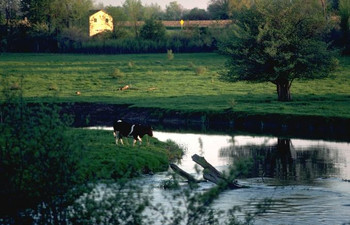 OK, my mother finally suggested it. And this year, our cattle have taken the job of mowing (most of) our lawn.
We have a large front and back yard. It would take 2-3 hours to mow all of it, and this was once a week during the worst of the year.
Our old mower had hit the shop the last couple of years during that worst time. Once with a broken rod, and another with electrical problems (bad starter). So the grass got long and shaggy. I suggested that since we were short on grass for the Bull and steers we had up at the house, we just let them have it. A section away from the house, just for trial. (We keep the Bull and grass-fed steers up near the house for pampering/finishing until the Bull is ready to go back with the cows and the steers are ready for harvest.)
Since they crop it close, we couldn't care. It's just lawn, anyway. And the manure is an extra. We found that the first time through, they do a great job, since there aren't any patties (much) left from the last year. Otherwise, they leave little tufts here and there. The rave results, and the improved weight of those guys, was a good seller to expand the activity.
This year, I was about to take out the mower for the first time, and my mother seemed to be astonished that I was going to mow so much, almost insistent that I let the Bull and steers do that job. So I listened to her and strung the polywire around anything we didn't want rubbed on or trimmed (a couple of out buildings, the thornless blackberries, and the dwarf fruit trees). One trick was to park an old trailer on edge of the gravel lot and wire on an insulator rather than attempting to drive a post there. And we have an oil pipe welded to a tire rim that takes up the slack in a similar area.
I still get the job of mowing around those low trees.
These bovine boys are so trained to that polywire, I don't even have to charge it all the time. If it's a wood building, I found that the polywire can go right on it, so I need less posts (as long as I keep it tight).
And this is part of our rotation by the house. They eat all this off close, and then I let them into another pasture they haven't been in for awhile. I don't have to water them in our back yard as there's a big pond there - and they trim right down to its edge, a plus. While I don't let them mow the pastures that close, lawn is still lawn.
When they are done, I take down the polywire and go through to clip off the high spots (as mentioned above - tufts) After that we leave it to grow high again. And mow anything I couldn't get to near those out buildings.
Then the lawn sits to grow up again until it gets back up to about 6-8 inches. Meanwhile, I trim off the edges and make it look like it's cared for - and the Bull/Steers crowd gets it again.
This continued until June, when the Steers are shipped and the Bull is back to other quarters with his harem. But these boys keep the lawn trimmed through the most abundant growing season. (Later I can also let in the cows and their calves, as one of their pastures is right "next door", but have to string a double polywire to keep the calves out of the road. And it definitely is charged at that point.)
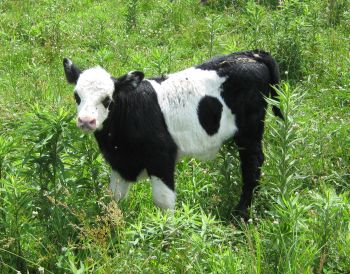 What do our neighbors think? Well, they find it amusing. We have Belted Galloway/Angus crosses, so it's a bit picturesque, especially with the yellow polywire as an "accent". And I always trim the roadsides and ditches. The cattle take care of trimming the trees and shrubs (not the evergreens by the house, which are toxic), so the lawn keeps an interesting "ambiance" all summer.
And visiting family knows what we are doing - and usually get a half from one of those steers, so usually stay mum if they have any complaints or comments. (Or get a return comment that they can come over and take over the mowing anytime they like.)
One side-benefit is our mole population gets a work-over. Not only does the pulsing effect (and fertilizer) make for more luscious lawn, but the cultivator action forces the moles to dig deeper.
FWIW - your own mileage may very. Don't try this with your corn-fed feeders, but grass-finished steers, momma cows, their calves, and grass-fed stockers seem to do fine.
PS. If you aren't close enough to take advantage of our locally-grown Grass Fed Beef, consider U.S. Wellness. They are another Missouri farming operation which sells more than just beef. (I hear their cheese is excellent!) And have next day delivery.

![Big Cow [2]](http://sbs.bur.st/pics/big_things/big_cow2.jpg)

