Showing posts with label Shopping. Show all posts

Tuesday, June 24, 2014

Next Step: Building a Buyers Club For All-Year Beef Supplies (and More)

Our predicament is your gain - "from each dilemma, a new opportunity is found."

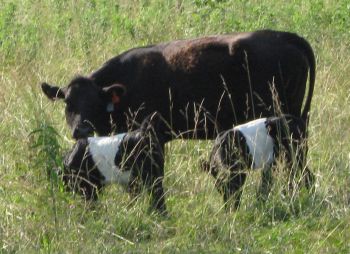
(Our latest calf - "Ears")
The story is that we had two bulls at the home place, and some heifers and cows we didn't want bred. Bulls fight over females, so we couldn't turn both out with the cows and heifers - yet we also didn't have three places we could keep everyone happy and well fed.

So our youngest bull is slated to be processed. But no buyers lined up.

Which means we have to stock an empty freezer - in spite of everything we already have in there.

The solution is to re-implement our Buyer's Club.

What this means is that the Buyer's Club itself buys the animal, and any member may share in the purchase. That falls within the custom-exempt law for processing.

Today, we're opening this up to new members. 

There will be a free membership, which will be informative only. A mailing-list, actually.

A paid membership (which is credited on first purchase) will be required to be part of the beef distribution.

Anyone who has already purchased from us is already a Buyer's Club member.

Too simple:
  1. Sign up on the form to the right and give us your email.
  2. We'll send you regular emails with what is currently available and upcoming, as well as related offers when we find other farmers with goods for purchase, and also what our processors have available. (Just one email a month as long as you stay subscribed - and you can opt-out at any time.)
  3. You buy what you want, or sign up for an upcoming beef-share. 
When you buy as a member direct, then you'll need to pick your beef up from us directly (we do not ship, as it's to expensive.)

If you buy a share in a beef, then you'll pick it up directly from the processor.

Of course, you can also get several people join in and a single member can pick up the order for everyone.

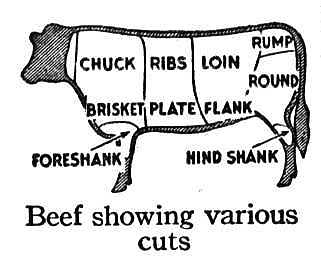
This gives us considerable leeway in distributing the various cuts. (Some people like liver, tongue, and heart, for example.) As well, when we have a "hamburger" cow, we can deal with that more easily - as a quarter of a large cow might be too much for some.

Anyway, you get the idea.

Sign up and let us know. 

Sunday, February 9, 2014

What is Dry-Aged and Wet-Aged Meat - and Why Should You Care?

Dry Aged Vs. Wet Aged

Healthy Meat: Dry-Aged or Wet Aged beef is your choice.There is always some discussion about how to prepare your meat – is it dry aged or wet aged? All meat has to have a cool-down period to get the temperature down, not just in Missouri. There is a minimal delay needed from the time the live beef is delivered and the wrapped, frozen packages are ready for pick-up and delivery.

Meat should be aged before it is cut and wrapped. This increases tenderness.

I found this PDF called "Beef and Part Whole Animal Buying Guide" from the Iowa State University Extension, which says:

Beef Aging

Aging, measured in days, refers to the time from when the animal is slaughtered to when the beef carcass is broken down into retail cuts. Beef purchased directly from farmers or ranchers and processed by a local butcher will typically be “dry aged,” meaning the carcass will hang in a walk-in cooler while aging. “Wet aging” is a process used to age wholesale beef cuts in vacuum packaging and not often used by smaller-scale meat processors.

Dry aging beef does three things:

1. Improves meat tenderness

2. Increases “beefy” flavor

3. Causes meat to lose weight through evaporation

...Additionally, beef that is "hanging" takes up the butcher’s limited cooler space, so you can expect to pay a fee for additional aging. The desirability of the increased beefy flavor that develops through extended aging is purely personal preference. Aging beyond 28 days may result in off flavors. Confirm with your butcher how long your beef carcass will be aged.

As a general rule, younger animals will be more tender than older animals and fatter animals will be more tender than leaner animals.

The general average is about 2 weeks, while traditionally beef has been aged for 3 weeks. Most of the tenderizing occurs in the first couple of weeks, with additional flavor and weight loss occuring later.

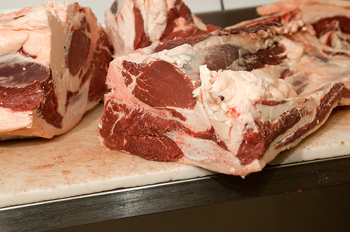
Wet aging is simply cutting and wrapping the beef in air-tight plastic immediately. This is used by corporate processors, as it tends to preserve the color. As well, it takes up much less locker space. Some beef has been anecdotally reported to be "aged" as it's shipped from plant to plant. Some plants deal with the live animal, then cut and seal the "primals", which are then loaded onto trucks.

These primal cuts are shipped to other plants which can deal with rendering them into smaller cuts, as well as packaging them for various food store chains. Finally, it's shipped to your local supermarket, where it finishes it's "aging" in the display case - sometimes less than a week from the time it was a live animal.

The processors we use do not use wet-aging.

We use traditional dry aging, hung in lockers and then parted out. These are then sealed in plastic and frozen to preserve their flavor and quality.

Our experience is that wet-aging simply doesn't result in the best-tasting meat. Along with the corn-fed diet, beef can wind up quite bland through this quick-aging process.

Grass fed beef, properly dry-aged, is a delight to eat - both tastier and healthier for you.
Enhanced by Zemanta

What's Safe, Healthy, Cheap, Green, and Runs on Grass to Grow Your Meat?

Grass Fed Beef is: Safer, Healthier, Cheaper, Greener

Grass Fed Beef is: Safer, Healthier, Cheaper, Greener The reasons we raise grass fed beef are few. And they boil down to simply these four. 
 
It's our opinion - based on our experience - that Missouri grass fed beef is the best solution for all of these points. 
 

1. Safer

In any supermarket, you can't tell that two steaks laying next to each other actually came from the same beef carcass. Unless you see that carcass actually cut into its pieces, you won't know what animal it came from. But even then, you won't know how that cow was raised or what it was fed. And you don't know how it was processed into that meat you are buying. 
 
This is exactly how all these infectious diseases get circulated. People trust that corporations, inspected by governments, actually know and do best for everyone. Neither corporations or governments do their jobs perfectly. Some short-cuts get taken here and there. They aren't caught and traced until someone gets sick.
 
And that system works only as long as everyone follows the rules. But it's not a perfect system. 
 
Last time I followed the government tracing down a contagion which escaped, it traced to hamburger which was mixed together from 4 states and 3 countries. Somewhere, along the line, a processor goofed, short cut, cheated. And the result was that an untraceable infection was let loose into hamburger and widely distributed. 
 
The result was that a few people died, a lot of people got sick. One person wound up paralyzed for life. Her mother cooked her up a hamburger from meat bought at the same local supermarket in their neighborhood.
 
With locally-raised Missouri grassfed beef, purchased from a farmer  you know, processed at a local abbatoir that you can visit - then and only then will you know that your beef is safe to eat. Only then.

 

Healthy food is that you can inspect for yourself, and know where it came from.2. Healthier

When cows are fed anything but grass, they change. Diet determines the quality of the animal as it grows. What they are fed influences the muscle fibers. When they are fed corn grain, then extra fat is added to their system. Grain doesn't digest well, so the acid-indigestion is offset with other food additives. This is a solution that becomes another problem. Often this is where anti-biotics come in.
 
The overall situation is that the more they "add" to a cow's diet in order to make the production smoother, cheaper, or faster - those additives have an effect on the meat. Many of them stay in the fatty, intramuscular tissues. So what they feed cattle is what you eat, after a fashion.
 
That said, cows can and do eat a wide variety of forages in their natural state. They have four stomachs, which allows them to thoroughly digest growing material in order to extract all the nourishment they need. This one biological fact also allows them to digest all sorts of non-natural diet materials and not only survive, but continue to gain weight. 
 
When you eat meat harvested from Missouri grass-fed animals, eating only natural forages, you get the benefit of lean and natural beef. It is said that where a person could make their diet only on this, they would actually get all the necessary proteins, minerals, and vitamins they need. Some have, in fact. While we suggest that you continue salads, breads, fruits, and milk products (avoids boring "same-old's" situations), one should take that into account. 
 
A healthy diet would start with healthy foods, though. And grass fed beef is healthier than many, if not all feedlot-produced meats.
 

Cheaper grassfed beef is bought by the quarter.3. Less Expensive

Buying a Missouri beef by the quarter takes out tons of middlemen - literally. A beef raised by a farmer, and sent to a processor, then delivered to you, has no real middlemen. You pay the processing fee and the farmer's growing costs. 
 
What you don't pay is having it trucked all across the country to go to different specialty plants which kill, part, and wrap the meat. Then it winds up in a supermarket. That's at least two more layers of workers which have to be paid, along with all those trucks, plants, warehouses, and stores.
 
Now some object to the cost of hamburger when you buy it direct from the farmer. But they often don't see that the various steaks, roasts, and other cuts are also the exact same price. Supermarkets charge much more for choice cuts. If you actually price the separate cuts by name, you'll find that a quarter-beef costs you 3/4's less than the same pounds of cuts bought separately.
 
The bargains are in buying direct and buying in bulk. Value you can't arrange from your local big-box supermarket.
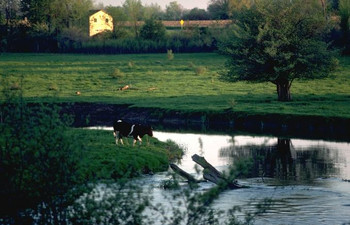
 

Cattle are 4. Greener

While it's quite a buzz-word, growing "green" products is hard for many industries. There are all sorts of arguments about whether feed-lot beef or pasture-finished beef are more environmentally "friendly". 
 
For us, the argument was solved when we found out that it was less expensive and just as productive to raise cattle using all-natural methods. Our cattle eat natural forages all their lives. If they need medicine to cure an illness, the vet gives it to them. But because they live healthier lives in natural surroundings, our vet bills have become less and less. Not all that surprising.
 
When our cattle eat corn, it's the whole plant when it's growing and green. (Did you know that corn is a grass?) But they mostly eat a huge variety of grasses and forbs and clovers, plus others. (For instance, they like to eat tree leaves, as it is a natural wormer.)
 
By keeping cows on pasture 24/7/365, you actually take nearly nothing away when you process that animal into meat. Well over 90% of what the cow eats returns right into the soil, in a manner which helps that soil raise even more grass than before. Feedlots have trouble with the manure. Our Missouri cattle put that manure right back where it would do the most good. It's natural fertilizer, after all. And so our pastures are constantly improving. We don't have to spray them or fertilize them - ever. 
 
So any argument that we have to use carbon-based fuel for anything other than moving that cow to the processor is moot. Our cattle are born here, raised here, and the lucky few old cows are buried here. Everything else - you get. Meanwhile, they consume no fossil fuels, but help the land sequester more "greenhouse gases" than they create with their digestion. Tell me a feedlot can make those claims. 
 

Summary

When you next have a chance to go to a commodity or big-box supermarket. Ask the manager or stock-person where that meat came from - and if those two steaks sitting side by side actually came from the same animal. And who processes that cow into meat. You'll find they don't actually know. 
 
But now you know that your best pocketbook/wallet value, your best red meat raised in the "greenest" fashion, and perhaps the healthiest protein is also the safest. If you know your farmer, know your processor, and buy Missouri grass fed beef by the quarter.
 
And if you want to see how the safest, healthiest, cheapest, and greenest Missouri grassfed beef is raised - just come visit our farm. We'll answer all your questions and show you around. And you can reserve your next order at the same time.

Enhanced by Zemanta

How to Find Missouri Grass Fed and Pasture Finished Beef

Producing the Finest Missouri Grass Fed
and Pasture-Finished Beef

At pasture on Worstell Farms - grass fed Missouri beefWelcome to our farm!

Our work and mission is to continually improve the health of our farm, it's pastures, and produce - and to raise the highest quality grass fed beef possible, becoming more sustainable as we do.

The current improvements have been in moving toward natural pasture-finished beef with improved genetics and heart-healthy beef.

To do this, we are constantly improving our herd and also tweaking our grazing techniques to make these ever more environmentally sustainable.

We have also started to direct-market our beef, meaning that we can now tell you almost exactly what your cow has been eating for it's entire life, and where it was processed. And you get better value for your dollar, as well as un-matched food security.

Unlike your supermarket beef, you can inspect every step of the way if you want to.

We think that you deserve to know exactly where your food comes from and how it was raised and made into beef cuts you buy.

How our beef is different

  • Only locally-raised sires and dams are used.
  • Humane treatment at all times (some even say they are "spoiled").
  • No growth hormones. 
  • Antibiotics only when prescribed to cure an illness.
  • Lots of fresh air, and all the water and grass they can enjoy.
  • Our beef is bred to thrive on grass, not grain.
So, enjoy on this site all the information we can give you about how to get high-quality, locally-raised beef which keeps all of its natively tasty flavor.
We raise our beef just so you can enjoy it, just as we have for most of our lives.
Enhanced by Zemanta

Saturday, February 8, 2014

We're Moving - right here - stay tuned as the dust settles...

(photocredit: BugMan50)

Don't worry, we still talk about wholesale grass fed Missouri beef 

and discount meat in bulk - the same high quality as usual.


Just wanted to let you know there's been some changes.

I'm moving my hosting, so took this opportunity to update my site. You'll see we now have a lot more to talk about than just cattle and grass-fed beef, although on my farm, this is much higher on the conversation list than other topics.

My old site - which links directly to this one, was a bit too limiting as well. For all the bells and whistles, it simply couldn't keep up with the intense amount of data I wanted to share with all of you.

Face it, even the best CMS simply isn't a blog. No matter what input I gave to the backend programmers, this never got real to them. Sometimes you have to take off the dress shoes and put on some comfortable old boots which can take the real miles of travelling. And meanwhile, Google has made considerable improvements to their blogging platform which makes this upgrade possible.

All I'm doing is bringing that original content over here, and linking to it. But there will be quite a few posts in a short amount of time.

After that, I hope to catch you all up on some research I've been doing - plus more pictures of this year's cute and wooly calves...

The other links above will take us into some related areas of Natural Diet (beef-based, of course), Preparedness, and Modern Homesteading.

As well, I have a lot of books to bring to you, which have been out of print for several years, and in the public domain. (Which is my alter-ego as an author and publisher.)

So, I'll see you after awhile with some new content, and you can meanwhile simply enjoy these classic pages.
Enhanced by Zemanta